¶ Equipment configuration recommendations for photography with different focal lengths
In star-field astrophotography, different focal lengths have greatly different requirements for equipment stability, balance and polar alignment accuracy.
Choosing the appropriate structural configuration can help improve tracking stability and obtain clearer imaging results.
This chapter provides corresponding recommended configuration and operation suggestions according to the focal length range of the lens.
¶ 1. Short focal length shooting (≤135mm)
Short focal length lenses have lower requirements for tracking accuracy and are the easiest way to shoot. They are also ideal for travel photography and wide-angle star fields.
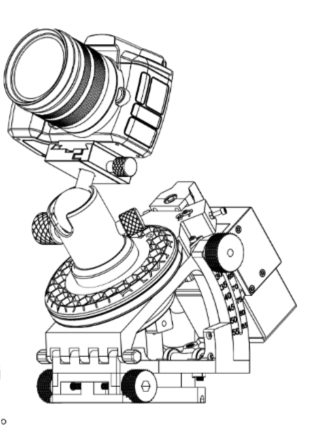
¶ # Recommended configuration
Recommended to use:
- Ball head
- Lightweight camera and lens combination
- No counterweight or simplified structure
To improve stability:
It is recommended to:
The camera should be installed directly above the ball head as much as possible
Avoid shaking caused by lateral unbalanced load.
¶ # Advantages of use
Short focal length systems have the following characteristics:
- High fault tolerance rate
- Easier to find targets
- polar alignment has lower accuracy requirements
- The overall device is lighter
Using a ball head:
- Can reduce overall weight
- Improve portability
- Suitable for travel and outdoor shooting
This configuration is particularly suitable for:
Wide-angle starry sky photography and mobile shooting scenes
¶ # Polar Alignment Recommendations
For short focal length systems:
You can use:
- Laser alignment
- smartphone alignment
Due to the high tolerance for error due to short focal length:
Extremely high polar-alignment precision is not required.
You can get good results.
¶ # latitude Rod Fixing Recommendations
In lightweight configuration:
latitude The rod can be fixed magnetically
Usually stable enough.
¶ 2. Shooting at medium focal length (135–300mm)
Within this focal length range, the system complexity increases significantly, and the requirements for balance and polar alignment accuracy increase.
It is recommended to gradually upgrade the equipment structure at this stage.
¶ # Recommended configuration
It is recommended to add:
- Manual declination axis
- Counterweight system (Counterweight)
- Vixen standard fixture
This structure helps:
- Improve system balance
- Improve target positioning efficiency
- Reduce tracking errors
¶ # Targeting optimization suggestions
Suggestions:
For declination axis installation:
ManualdeclinationUpgrade component
This component can:
- Easier to find targets in the night sky
- Improve composition efficiency
- Reduce the difficulty of adjustment
¶ # latitude Rod Fixing Recommendations
In medium focal length configuration:
It is not recommended to continue to use magnetic suction to fix
Should be changed to:
Use latitude Rod Holder Clamp (Rod Holder)
Reason:
As the weight of the device increases, the magnetic force may not be enough to ensure stability.
¶ # Polar Alignment Recommendations
Recommended use:
- Laser alignment
or - polar scope alignment (recommended)
To satisfy:
Accuracy requirements for long exposure
¶ # Important operating principles
When performing polar alignment:
Must be carried out under full load condition
That is:
The camera and lens have been installed.
Reason:
Heavier equipment may cause:
- Micro deformation of tripod
- Tracker slightly offset
If you align in advance and then load the device, errors may occur.
¶ # Counterweight recommendations
When the total weight of the equipment is:
over 1.5 kg
Suggestions:
Must use counterweight
If counterweights are temporarily unavailable:
Try to maintain:
The camera direction is close to the final shooting direction
To reduce the deflection caused by changes in the center of gravity.
¶ 3. Long focal length shooting (300–500mm)
This focal length range has extremely high requirements on equipment stability and polar alignment accuracy, requiring more stringent structural and operating specifications.
Any small error can lead to significant smearing.
¶ # Recommended configuration (strongly recommended)
Must use:
- Declination bracket
- Counterweight system
- Manual Go-To upgrade component
These structures can:
- Improve system balance
- Reduce vibration
- Improve target positioning efficiency
In telephoto systems:
Balance is equally important as rigidity
¶ # latitude Rod Fixing Requirements
In this focal length range:
Must use latitude Rod Holder (Rod Holder)
Don’t just rely on:
Magnetic structure.
Otherwise:
- Risk of tipping
- Increased tracking error
¶ # Polar alignment recommendations (critical)
In a long focal length system:
polar alignment accuracy determines imaging quality
Highly recommended:
Use polar scope to align
for maximum accuracy.
¶ # Be careful when using laser alignment
If using laser alignment:
Do not point directly to the center of Polaris.
Should:
is slightly offset from Polaris, pointing towards the North Celestial Pole (NCP)
Reason:
The North Celestial Pole is not located at the exact center of Polaris.
¶ # Key Principles of Polar Alignment
Always:
Polar alignment under full shooting load
Reason:
A change in center of gravity will result in:
- Device is slightly bent
- The direction of the polar axis changes
This is a common source of systematic error at telephotos.
¶ Tripod selection suggestions (focus on telephoto)
In the 300–500mm focal length range:
Tripod rigidity is extremely critical
Must use:
The strongest possible tripod
Recommended:
- High load-bearing model
- Metal or carbon fiber construction
- Low center column design
Insufficient tripod rigidity may result in:
- unstable tracking
- Image trailing
- Blurred image
Even if the polar axis is perfectly accurate, you won't get a clear image.
¶ 4. Quick reference table for focal length configuration
| Focal length range | Recommended structure | Polar method | Counterweight recommendations |
|---|---|---|---|
| ≤135mm | Ball head | Mobile phone / laser | Usually not required |
| 135–300 mm | Declination axis + counterweight | Laser / polar scope | Required at ≥1.5 kg (Go-To section only) |
| 300–500 mm | Declination bracket + counterweight + Go-To | Polar scope (strongly recommended) | Required |
¶ 5. Summary of key principles
In star-field astrophotography:
The longer the focal length, the higher the requirements for equipment stability.
Please always follow these guidelines:
- The longer the focal length, the more complete the equipment structure must be.
- Polar alignment must be performed under full load condition
- Telephoto systems must use counterweights
- Tripod rigidity directly affects imaging quality
Reasonable configuration of equipment is the basis for obtaining clear starry sky photos.